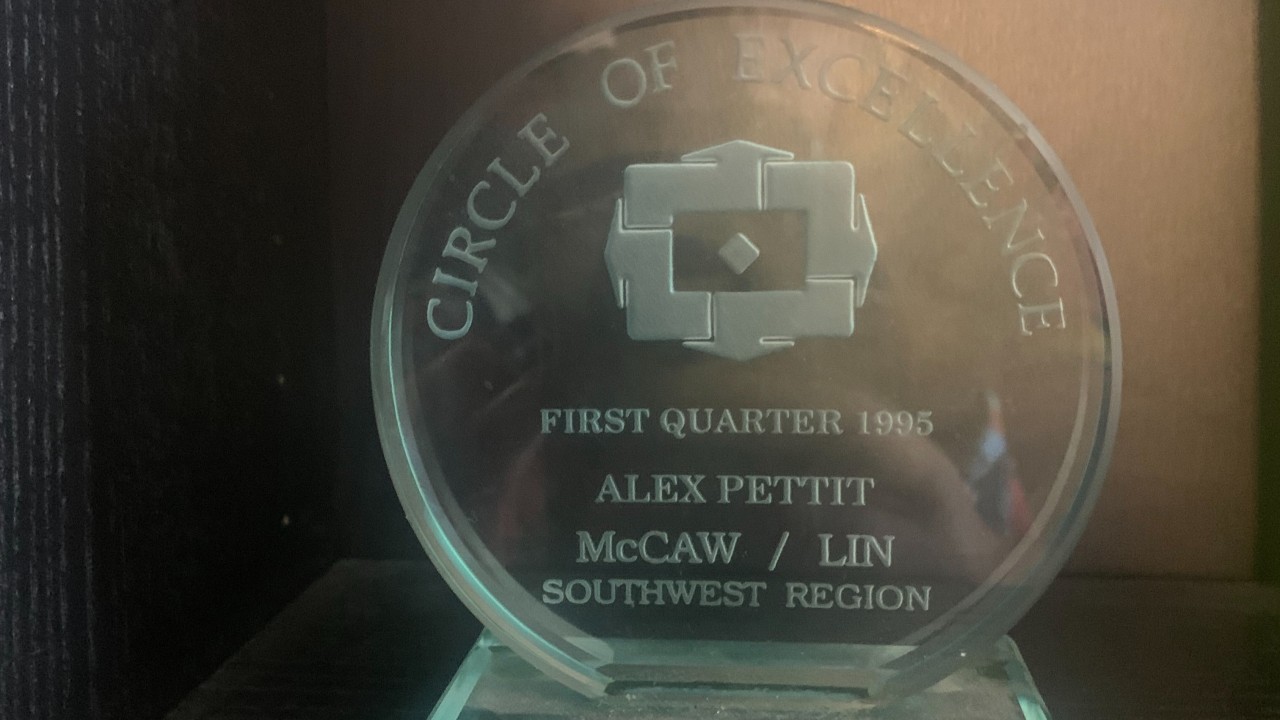
In 1994, I was part of a Radio Frequency (RF) engineering team at Metrocel Cellular.…

The Sixth M: Why Meaning Will Be the Last Job Skill Standing
I’ve been watching the job market shift—and watching my own expectations shift with it.
Full-time roles with benefits are becoming less common, while contract-based opportunities—business continuity, project-based modernization, enterprise architecture advising—land in my inbox more frequently. I used to view 1099 work as a step down from the traditional W-2 positions I’d held. But I’m beginning to see it differently—not as a fallback, but as a forward-facing strategy.
The work remains valuable. What’s changing is the container that holds it. In a time when method, machinery, manpower, materials, and money continue to shift, meaning remains the work that endures.
AI is already transforming work. Some predict it could displace up to half of all jobs in the next decade—not just call centers or receptionists, but managerial and strategic roles as well. What remains?
Meaning.
In my MBA program at Loyola, we were taught the Five M’s of Management: Manpower, Materials, Machinery, Method, and Money. But what they rarely teach—and what may soon matter most—is the Sixth M: Meaning.
Salespeople have always known this. When I worked at MicroAge, the best rep told me, “Your job is to get the client to talk about their problem. If you can’t solve it, connect them with someone who can.” That was meaning-making. That was value. That was work.
My mother used to say, “Salesmen rule the world.” And she wasn’t wrong. Most Fortune 500 CEOs come from either: – Finance (they know how to polish the numbers), or – Sales/Marketing (they can sell ice to Eskimos—or buggy whips to Wall Street, at least for a while).
But maybe it’s not just salesmanship. Maybe it’s making meaning (or sensemaking from my brief studies with Brenda Dervin), the Sixth M that will matter most in the coming economy.
Because whether you’re a strategist, a technologist, or a gig worker stringing together contracts, the people who thrive will be those who can help others understand what’s happening and what to do next.
It’s no longer enough to be the most efficient procurement officer, the most articulate project manager, or the most fluent programmer in the latest language. AI is catching up very quickly on technical mastery.
What it can’t replicate yet is this: Seeing the whole picture. Connecting the dots between systems, people, and purpose. Articulating why something matters and what outcome is truly desired.
If you’re a programmer, it’s not just about converting analyst pseudocode into clean functions. It’s about asking: What problem are we solving? Who is this for? What does success actually look like in the real world?
That’s not specialization. That’s contextualization.
And that’s where the Sixth M—Meaning—becomes the skill that outlasts the rest.
Related Posts